

The Standard ERP Trap: When Your Business Works for the Software
Any SME leader recognizes the scenario: amid rapid growth, a decision is made to organize business management, leading to the purchase of an off-the-shelf, generic ERP that promised to solve everything in two clicks. Initially, it seems adequate for issuing invoices and tracking basic inventory. However, as the company evolves, an expensive contradiction emerges: instead of the system adapting to your workflows, your team ends up changing the way they work just to fit into the software’s rigid boxes.
Soon, parallel spreadsheets begin to proliferate. If calculating a project’s true profit margin or checking an order status requires exporting three separate reports to Excel and cross-referencing them manually, the system is no longer adding value; it is creating operational friction, delay in quotes, and delivery bottlenecks.
In dynamic commercial environments—such as the businesses we work with across Cádiz and internationally—where operational agility makes all the difference, a company cannot afford to waste hours on inflexible software. Many forward-thinking organizations combine a robust management core with custom web platform development focused on business results, ensuring their technology mirrors their exact operating model.
Custom Software vs. Generic ERP: The Unfiltered Reality
When comparing custom software development to a packaged commercial ERP, sales pitches often gloss over real drawbacks. Off-the-shelf commercial solutions are marketed as universal, but they carry substantial indirect costs: per-user licensing fees, mandatory modules you will never touch, and total vendor lock-in.
A tool tailored specifically to your processes digitizes only what makes your business profitable, eliminating unnecessary steps and operational clutter.
The Hidden Cost of Per-User Licensing
A generic ERP might appear budget-friendly during the first quarter, but as your team expands, every new hire requires an additional recurring license, inflating your monthly bill. You end up paying for hundreds of complex features you do not need, while your staff only requires fast, reliable screens.
In contrast, with custom software, your company fully owns the code and the database. There are no toll fees for growing your headcount and no surcharges based on transaction volume, delivering long-term predictability to your cash flow.
Operational Flexibility vs. Inflexible Standards
Your competitive advantage lies in your unique workflows: your pricing strategy, your customer response time, or your specialized warehouse controls. A generic ERP forces you to abandon those differentiators to conform to its generic template.
Bespoke development amplifies your operational strengths without forcing you to pay for expensive bolt-on customizations that never truly integrate seamlessly.
Signs Your Business Has Outgrown Its Boxed ERP
Switching to custom software is not an aesthetic choice; it is a direct response to operational bottlenecks that choke daily revenue. The warning signs that your current system has reached its limits are unmistakable:
- Redundant administrative tasks: Employees re-enter delivery notes or customer details across disconnected apps because the systems cannot communicate with each other.
- Over-reliance on uncontrolled spreadsheets: Each department maintains isolated Excel sheets to track commissions, purchasing, or margins, splintering company data.
- Lack of real-time visibility: Leadership lacks instant access to profitability and sales performance data, forced to wait for manual reports to be compiled.
- Staff frustration: Team members spend more time wrestling with clunky, convoluted forms than serving clients or driving revenue.
A confusing interface slows down operations and introduces costly errors into invoices and purchase orders. Just as user experience optimization in digital sales environments prevents lost conversions, internal tools require clean, intuitive interfaces to prevent expensive mistakes. Discovering how automation with AI can grow your business illustrates how replacing cumbersome manual routines with purpose-built flows frees your team to focus on high-impact work.
Bespoke Software Myths: Costs, Timelines, and Vendor Lock-In
Many executives postpone modernizing their systems due to persistent myths: they assume custom development requires astronomical budgets or creates permanent dependence on a single programmer. Let’s examine the reality from a pragmatic business perspective.
Today, development never starts from scratch. We leverage battle-tested architectural components to build modular solutions. You can address the most pressing bottleneck first—such as specialized billing or job-cost tracking—and have it operational within weeks, validating your return on investment at every stage.
As for vendor lock-in, true dependency happens with closed proprietary platforms that hold your business data hostage and hike their rates every year. At Martos Aranda, we believe in a direct, peer-to-peer business partnership with zero lock-in: the source code and databases remain the exclusive property of the client, built on clean standards that guarantee full autonomy.
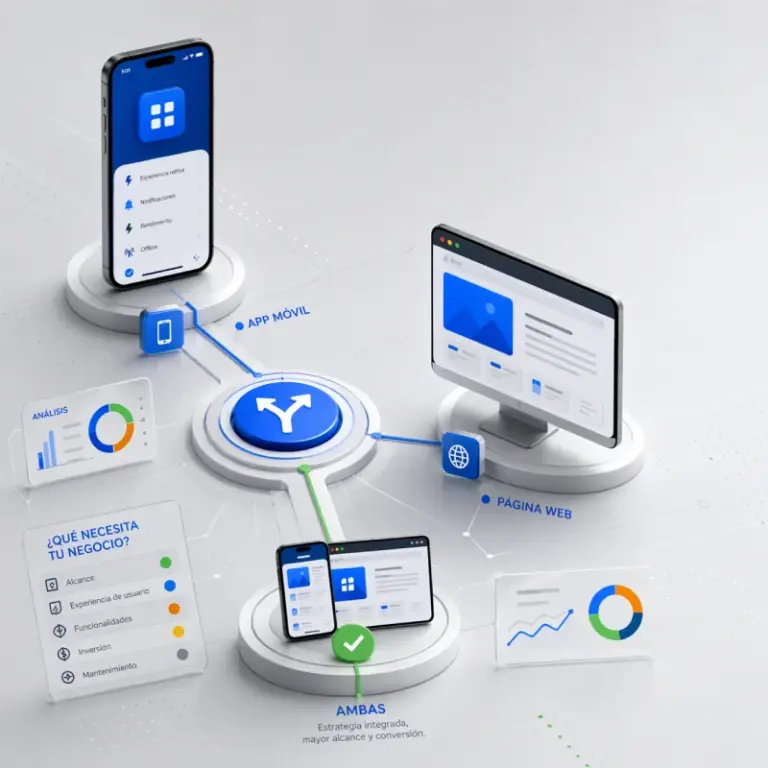
Furthermore, modern web-first architecture allows internal tools to run securely on any browser, smartphone, or tablet without needing bulky on-premise installations at the office.
How to Migrate to Custom Software Without Halting Operations
The biggest fear business leaders face when replacing their systems is business disruption: dropped calls, missing inventory, or delayed customer orders. A professional migration is executed in structured phases to ensure operations run without interruption:
- Ground-level process mapping: We consult directly with the team members who use the tools daily to design workflows that reflect real-world business routines.
- Agile prototyping and visual validation: We verify the usability and clarity of key screens before full-scale coding begins.
- Historical data cleansing and migration: We audit customer records, catalog items, and financial logs to import only clean, accurate, and structured data.
- Parallel testing: The new platform runs alongside your legacy system as long as necessary to ensure inventory calculations, pricing, and invoices match down to the cent.
- Go-live and hands-on training: We conduct practical staff onboarding with ongoing support to resolve any questions immediately.
This systematic protocol eliminates operational risk, protects business continuity, and allows your team to feel the productivity boost from day one.
ROI and Direct Impact on Your Bottom Line
Replacing a generic ERP must be justified by its return on investment. For the businesses we work with across Cádiz and beyond, the calculation begins with a straightforward question: how much unproductive time does your current software waste each week?
If three employees spend 90 minutes each day fixing faulty data entries and building manual reports, your company is squandering over 90 hours every month. Multiplying those wasted hours by employee compensation reveals an annual hidden drain that far exceeds the cost of commissioning a custom system.
Beyond immediate labor savings, custom software delivers decisive competitive advantages:
- Faster billing and cash flow: Instant invoice generation and strict payment scheduling protect liquidity. In fact, exploring how we automate everything from invoices to entire stores with AI demonstrates how eliminating administrative friction directly enhances profitability.
- Regulatory and fiscal compliance: Strict adherence to digital invoicing mandates and electronic reporting standards, avoiding administrative penalties.
- Building company equity: Proprietary software is an intangible asset on your balance sheet that builds business valuation and projects a solid, dependable corporate image to clients and partners.
A tailored management tool stops being an IT expense and becomes an engine of profitability, efficiency, and peace of mind for leadership.
Frequently Asked Questions
Is custom software more expensive in the long run than a generic ERP?
No. While the initial entry fee for a commercial ERP might seem affordable, recurring monthly per-user licensing fees and expensive custom workarounds steadily escalate costs. Custom software is an amortizable asset that carries no penalties or added costs as your team grows.
How long does it take to develop a custom software solution?
By adopting a modular development approach, the initial functional core addressing your primary bottleneck is typically ready to deploy within 4 to 8 weeks, with secondary features rolled out progressively.
Can historical data from our current ERP be migrated?
Yes. We extract databases covering customers, products, invoices, and transaction histories, cleansing duplicated or obsolete records before safely migrating the data into the new platform.
Do we need in-house IT staff to maintain custom software?
No. The system is hosted on secure cloud infrastructure. Preventive maintenance, updates, and technical support are handled externally with direct, responsive communication between business professionals.