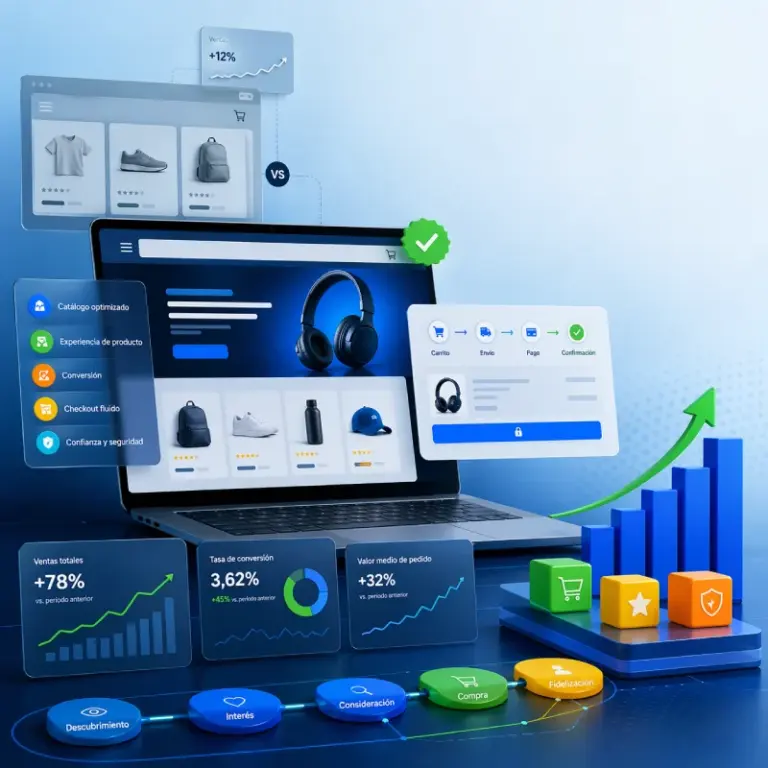


In e-commerce, user experience (UX, for its acronym in English: User Experience) is the discipline that studies and optimizes each interaction that a buyer makes in an online store, from their arrival on the home page to the final confirmation of payment and the tracking of their order.
Why a bad user experience ruins sales
Attracting traffic through SEO positioning or digital advertising requires a considerable investment. However, if visitors arrive at an online store that is confusing, slow, or has a cumbersome purchasing process, they will leave the page in a matter of seconds to buy from a competitor. Improving UX is not a decorative issue; It is the most direct strategy to increase the conversion rate without having to increase spending on traffic acquisition.
Through our web design for e-commerce service, we apply usability principles aimed at eliminating any point of friction.
The 5 critical areas to optimize UX in WooCommerce
To maximize commercial transactions, an online store must optimize five key components:
- Instant predictive search engine: Able to interpret spelling errors, search by synonyms or technical references and display visual results with price and availability instantly.
- Dynamic faceted filters: Filtering by attributes (size, color, material, brand, price range) without full page reloads.
- Enriched product sheets: High-resolution photographs from multiple angles, usage videos, precise measurement tables, real-time stock and verified reviews from previous buyers.
- Simplified one-step checkout process: Elimination of unnecessary fields, auto-completion of postal addresses and multiple secure payment options (bank card and Bizum).
- Total transparency in shipping costs and times: Visible information on return policies and transportation costs from the first moment.
Absolute mobile adaptability (Mobile UX)
Since more than 70% of purchases are initiated from mobile phones, the interface should be designed with thumb-friendly touch buttons, accessible bottom menus, and forms optimized for numeric keypads in phone or card fields.
Synergy with SEO and automation
An online store with excellent usability improves its permanence metrics and reduces the bounce rate, which in turn boosts its SEO positioning on Google. This ecosystem is complemented by stock and billing automation within our catalog of real cases.
Usability tests and A/B tests to optimize the funnel
User experience optimization is a continuous improvement process based on real behavioral data:
- Heat maps and session recordings: Visual analysis of areas where users click, stop to read, or experience difficulty moving forward.
- A/B tests on product pages: Simultaneous comparison of different layouts of purchase buttons, colors or warranty texts to identify which version generates greater sales.
- Periodic accessibility audits at checkout: Verification that error messages in card or address fields are clear and guide the user to correct them instantly.
The value of trust in details
Visible bank guarantee stamps, secure purchase certificates and clear links to return conditions reduce buyer anxiety and increase the overall ecommerce conversion rate.