
The mobile application market has matured substantially in recent years. Today, a company should not consider developing an app simply for prestige or presence, but as a calculated technological solution that solves real operational problems, improves the customer experience or opens a new avenue for recurring monetization.
The 4 conditions that justify the development of a mobile application
Before undertaking an investment in mobile development, a company must verify whether its model meets at least one of the following key conditions:
- High frequency of use by the user: If customers need to interact with the business several times a week (check schedules, make quick orders, accumulate loyalty points or manage appointments).
- Critical need for real-time communication: The ability to send direct push notifications to the lock screen with service confirmations or urgent alerts without depending on the user opening their email.
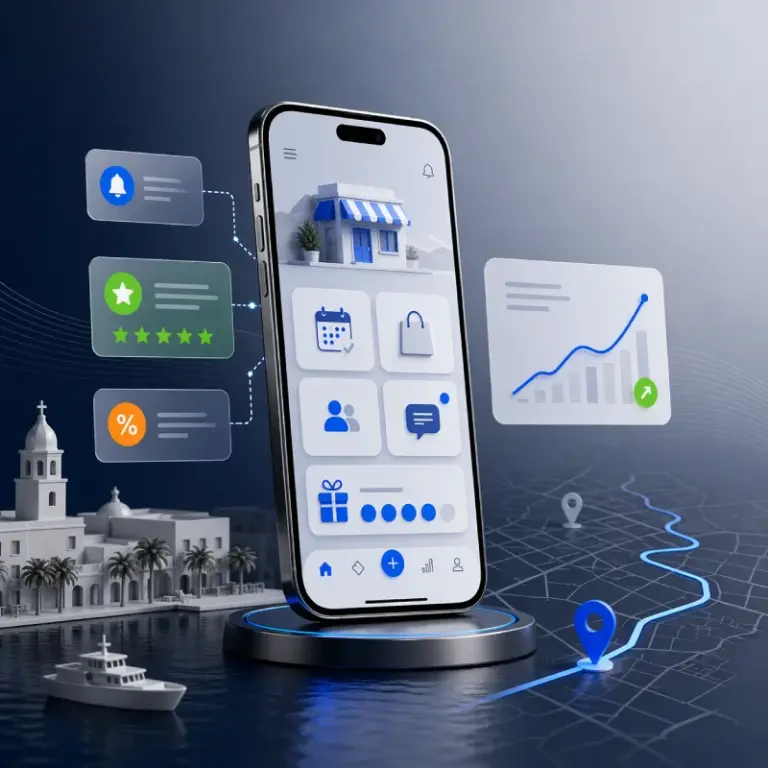
- Geolocation and real-time tracking: Services based on the user’s geographic position, such as tracking home deliveries, interactive tourist guides or live processional events.
- Internal tool for employees and operators: Technical management applications for work reports, warehouse inventories or mobile delivery note signatures.
The cost of user acquisition in apps versus the web
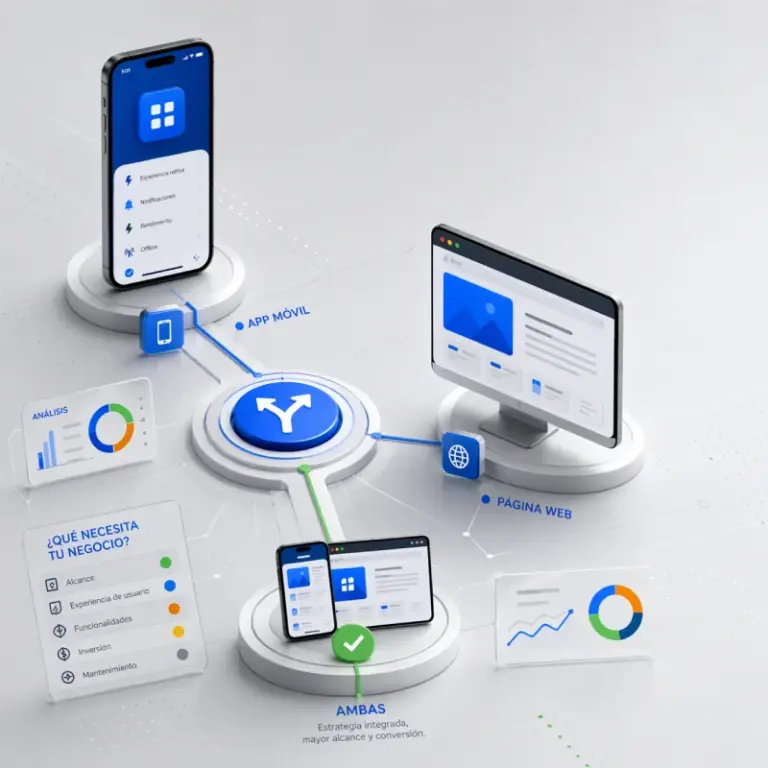
Convincing a user to download an app, grant it storage permissions, and keep it on their smartphone requires an extremely strong value proposition. If the customer only needs to check a phone number or see an address once a year, a fast and optimized website is incomparably more efficient and economical.
On the contrary, when the application offers exclusive practical benefits (personalized discounts, quick biometric access or offline content), the user retention rate multiplies.
Integration with databases and centralized management software
A mobile application should never operate in isolation. Its architecture must connect through secure REST APIs with the company’s central database, billing software and the online store catalog, ensuring that any price, stock or reservation changes are instantly synchronized across all channels.
Success stories in the local and cultural sector
Projects such as applications for mass events or live music agendas demonstrate how a well-planned mobile app can become the most used tool in a region, as reflected in the developments in our catalog of trabajos.
The combination of mobile development with digital marketing and loyalty strategies ensures the long-term profitability of the project.
Metrics to evaluate the success of a mobile application
The launch of an app should be monitored through specific performance indicators:
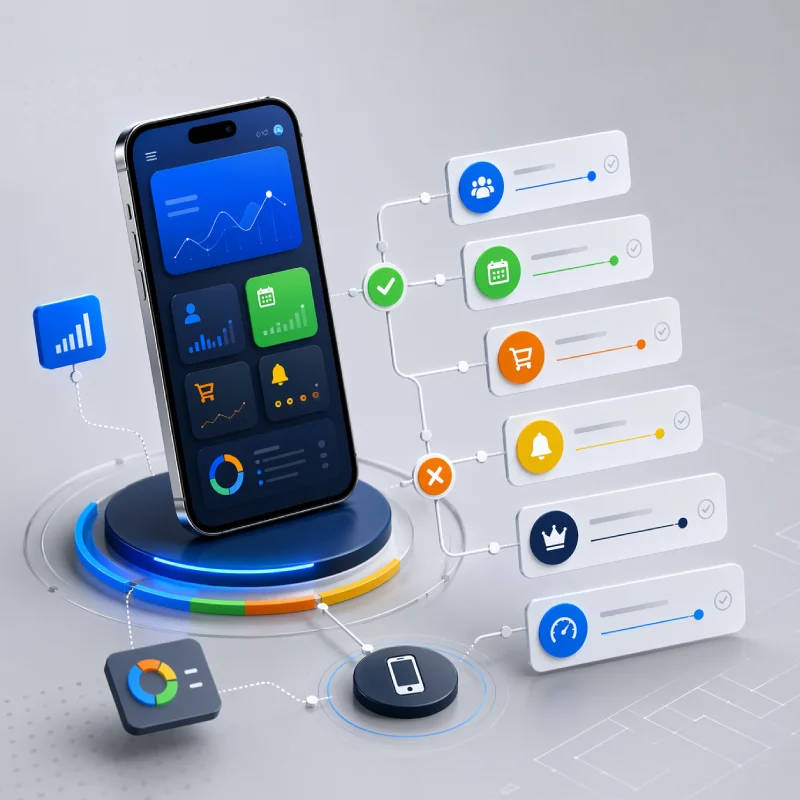
- Daily and Monthly Active Users (DAU / MAU): Measures the actual frequency with which users open the application throughout the month.
- 30 and 90 day retention rate: Percentage of people who continue using the app after the first month of downloading.
- Push Notification Interaction Rate: Percentage of clicks received on alerts sent to the lock screen.
Good practices in the design of mobile interfaces (UI/UX)
A successful app must prioritize simplicity: biometric logins (Face ID / fingerprint), two-touch booking processes and instant loading times without unnecessary intermediate screens.