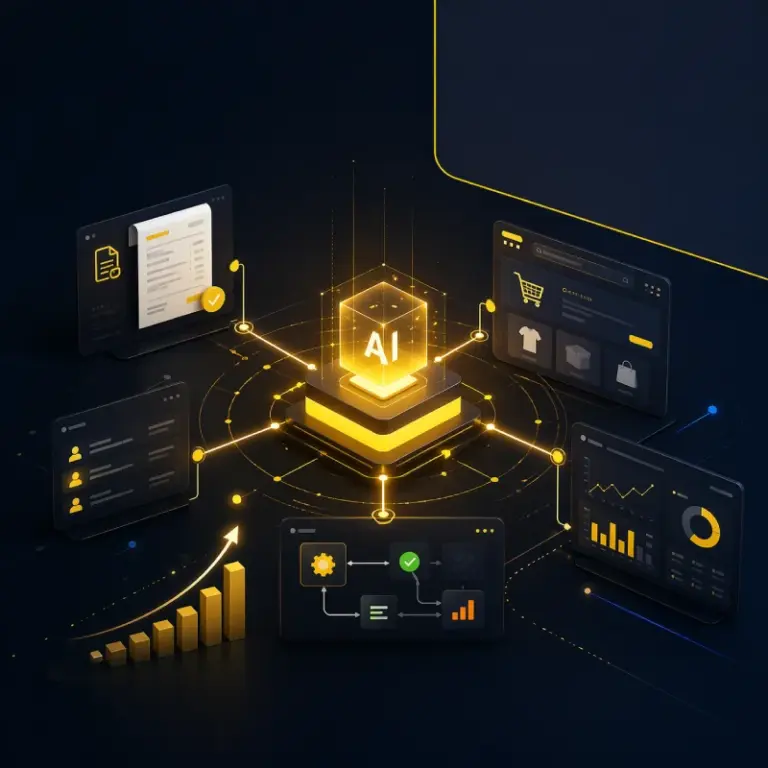


The sustainable growth of a company is directly conditioned by its ability to manage a greater number of clients and operations without the quality of service deteriorating or fixed costs skyrocketing. Automation supported by artificial intelligence represents the most powerful technological lever to achieve such operational scalability in today’s business environment.
The bottleneck of manual administrative tasks
In the majority of SMEs and traditional businesses, owners and managers dedicate more than 30% of their working day to bureaucratic tasks: preparing invoices, updating spreadsheets, responding to the same queries by email and chasing pending budgets. These hours invested in repetitive tasks take time away from commercial prospecting, product innovation and the loyalty of key customers.
Implementing digital automation solutions for companies eliminates this bottleneck, allowing information to flow between departments instantly and without human errors.
5 practical applications of AI to accelerate business growth
The following implementations generate a direct impact on the income statement of any sector of activity:
- Quote Tracking Automation: Scheduled sequences that automatically contact potential clients who received a quote 48 hours ago, increasing the close rate without additional sales effort.
- Dynamic generation of content and product sheets: AI-assisted creation of technical descriptions optimized for SEO in e-commerce catalogs with thousands of references.
- Appointment management and unattended reservations: Synchronized smart calendars that allow customers to reserve service slots in real time, sending confirmations and reminders via WhatsApp.
- Predictive customer segmentation: Automatic identification of customers with a high probability of repurchase to send them personalized offers at the right time.
- Extraction and normalization of external data: Automatic monitoring of competitors’ prices, public tenders or event agendas of interest to the sector.
Drastically reduced margin of error
Manual data entry processes are exposed to typing errors that can cause erroneous shipments, accounting discrepancies or incorrect billing. Automated flows validate the consistency of information before recording it, guaranteeing total reliability in the company’s records.
Connecting automation with web infrastructure
To maximize its performance, the automation must be connected to a professional website or online store that acts as a central point of data entry and commercial acquisition.
This comprehensive vision allows local companies to position themselves with a competitive advantage within our catalog of real cases and digital development.
Checklist to audit the digital maturity of your company
Before implementing automation solutions, it is advisable to evaluate which processes present the greatest friction in the organization:
- Is data entered manually into more than one computer program? If an employee copies information from an email to a spreadsheet and then into billing software, there is an immediate candidate for automation.
- Do stockouts or inventory imbalances occur? Automatic synchronization between the physical warehouse and the web solves this problem in real time.
- Are budgets lost due to lack of commercial follow-up? Scheduled reminders increase the conversion rate by more than 35%.
The role of language models (LLMs) in productivity
Current language models allow you to draft business proposals, classify customer complaints by urgency, and summarize work meetings in executive minutes with tasks assigned to each team member.